Stay in the know about wildlife, water quality, and ecosystems on Sanibel and Captiva Islands and in Southwest Florida
New Oyster Reef Includes 6 Million Pounds of Fossil Shell
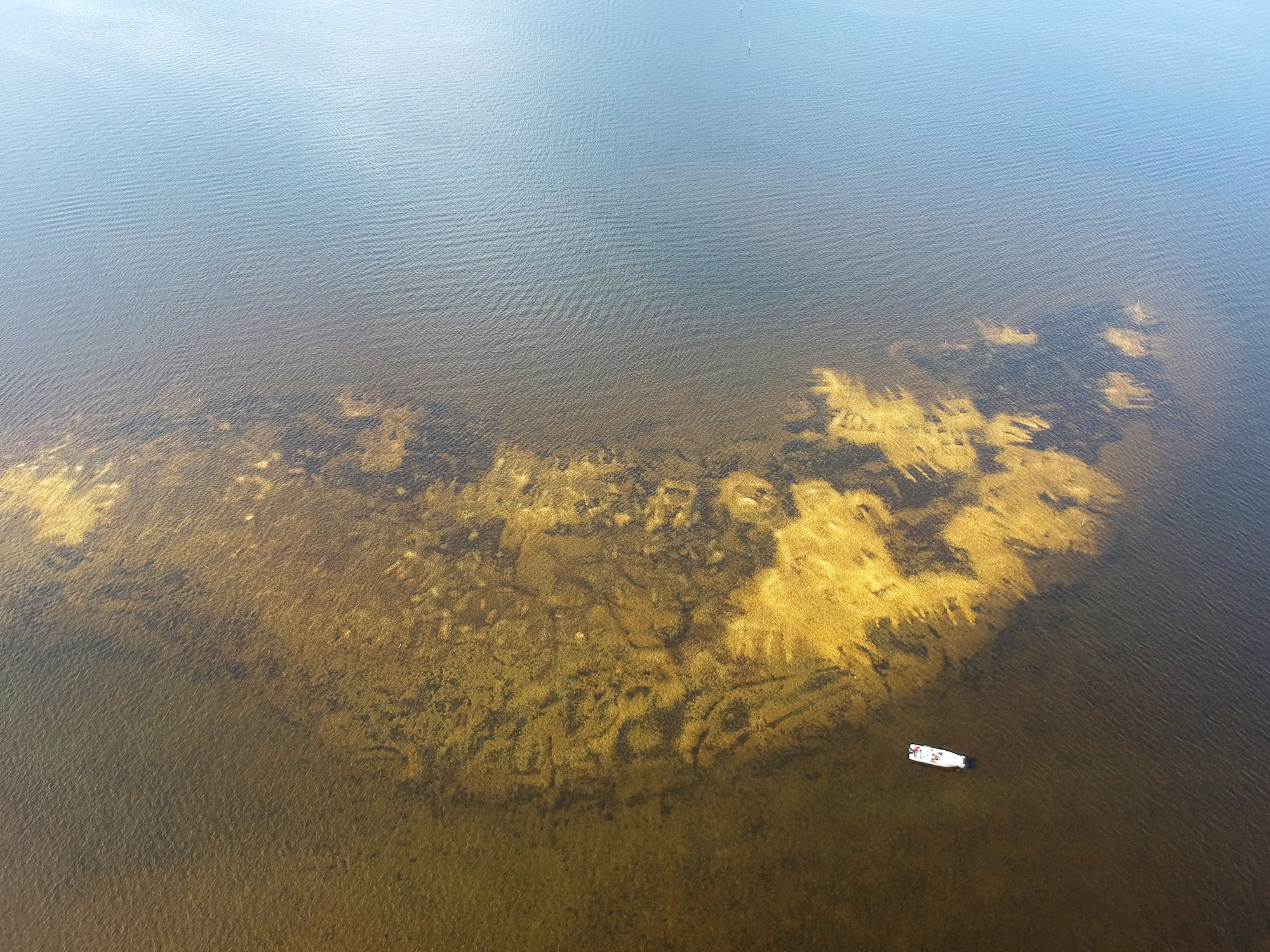
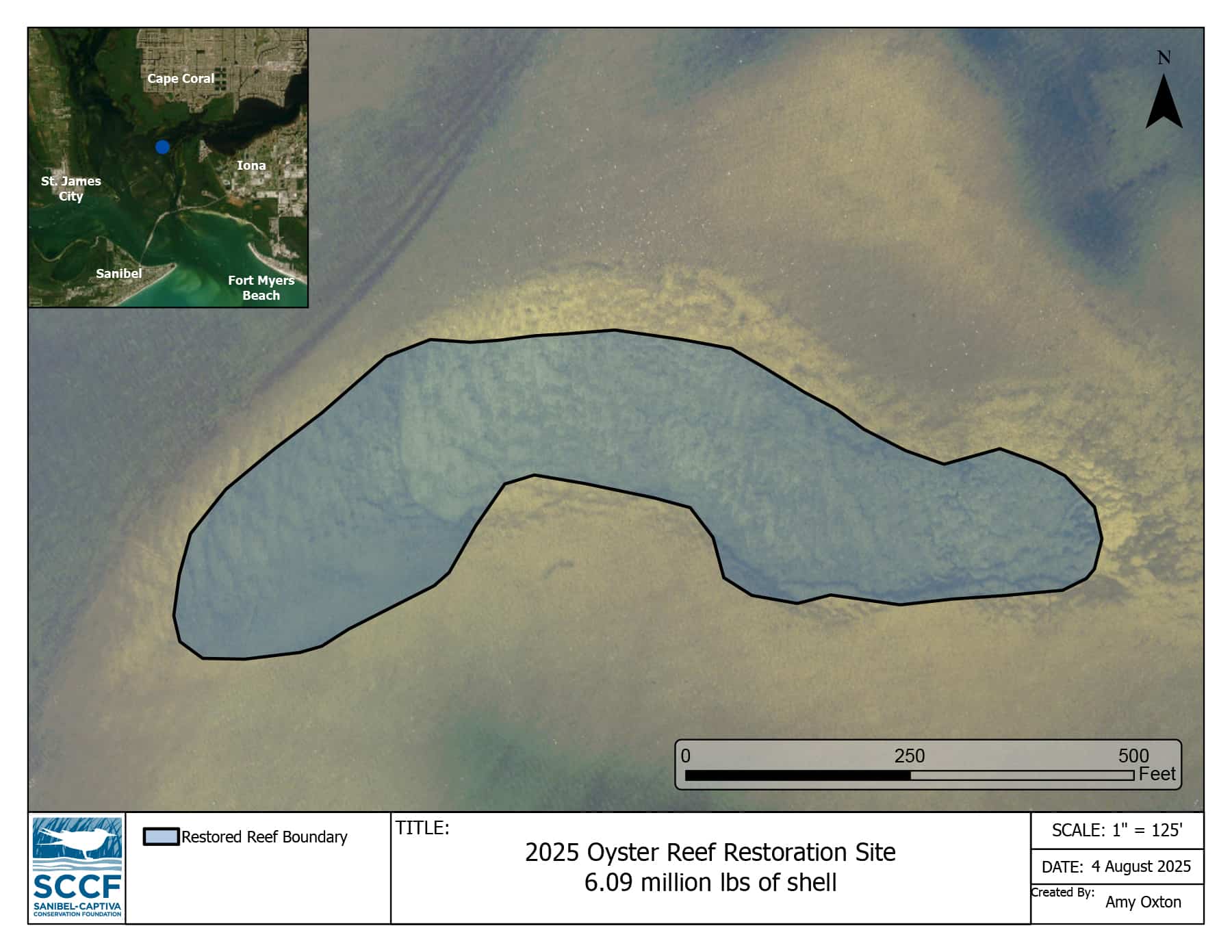
A new, 3-acre oyster reef has taken shape in San Carlos Bay, thanks to a massive restoration project led by SCCF’s Marine Laboratory.
The restored oyster reef is three times larger than other large reefs that SCCF has worked on restoring since 2007, including five reefs in Clam Bayou, two reefs in Pine Island Sound, three reefs in San Carlos Bay and one reef in Tarpon Bay. The project was made possible with $210,000 in grants, including $75,000 from the Florida Fish & Wildlife Conservation Commission, $75,000 from the U.S. Fish & Wildlife Service through Florida’s State Wildlife Grants program, $51,000 from Lee County Natural Resources, and $10,000 from the Coastal Conservation Association.
“The reef will provide a place for oyster larvae to attach and grow into adult oysters, just like it did historically at this same location,” said SCCF Marine Lab Director Eric Milbrandt, Ph.D. “Like many other oyster reefs in Southwest Florida, the natural reef was wiped out over the past few decades due to changes in the timing and delivery of freshwater flows, poor water quality, and other human impacts.”
Despite these challenges, the restored reef — located in between Cape Coral and the Sanibel Causeway — is estimated to have a high probability of success based on existing oyster recruitment, water depth, water quality, and proximity to other oysters and seagrass beds, Milbrandt said.
Construction included the placement of approximately 3,045 tons, or 6.09 million pounds, of fossil shell, which was sourced from Charlotte County mines that produce fossil shell for placement in landscaping and driveways. SCCF worked with a contractor, Blue Terra, which arranged for the material to be trucked and barged to the site, where a large water cannon was used to deploy the shell.
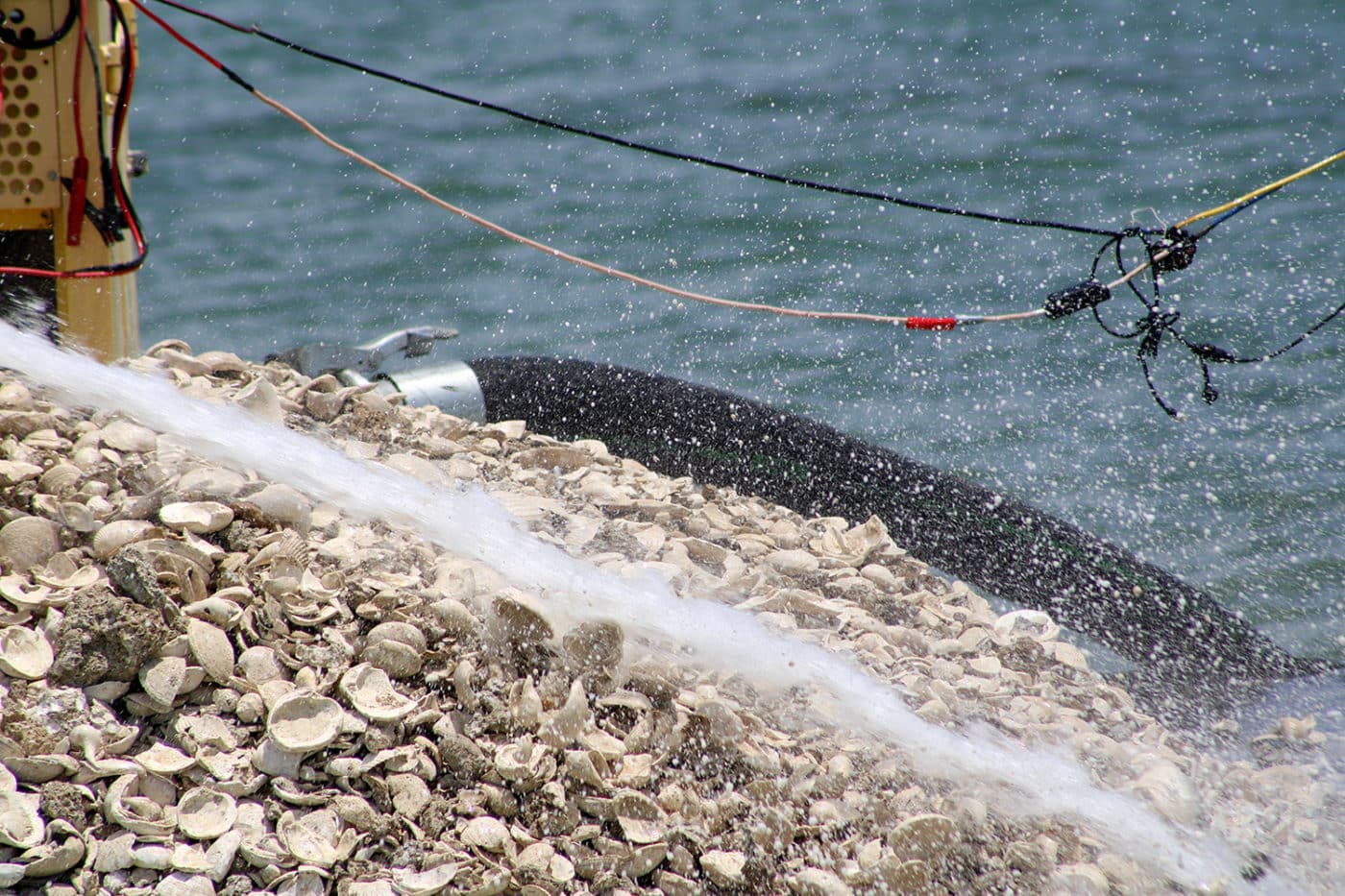
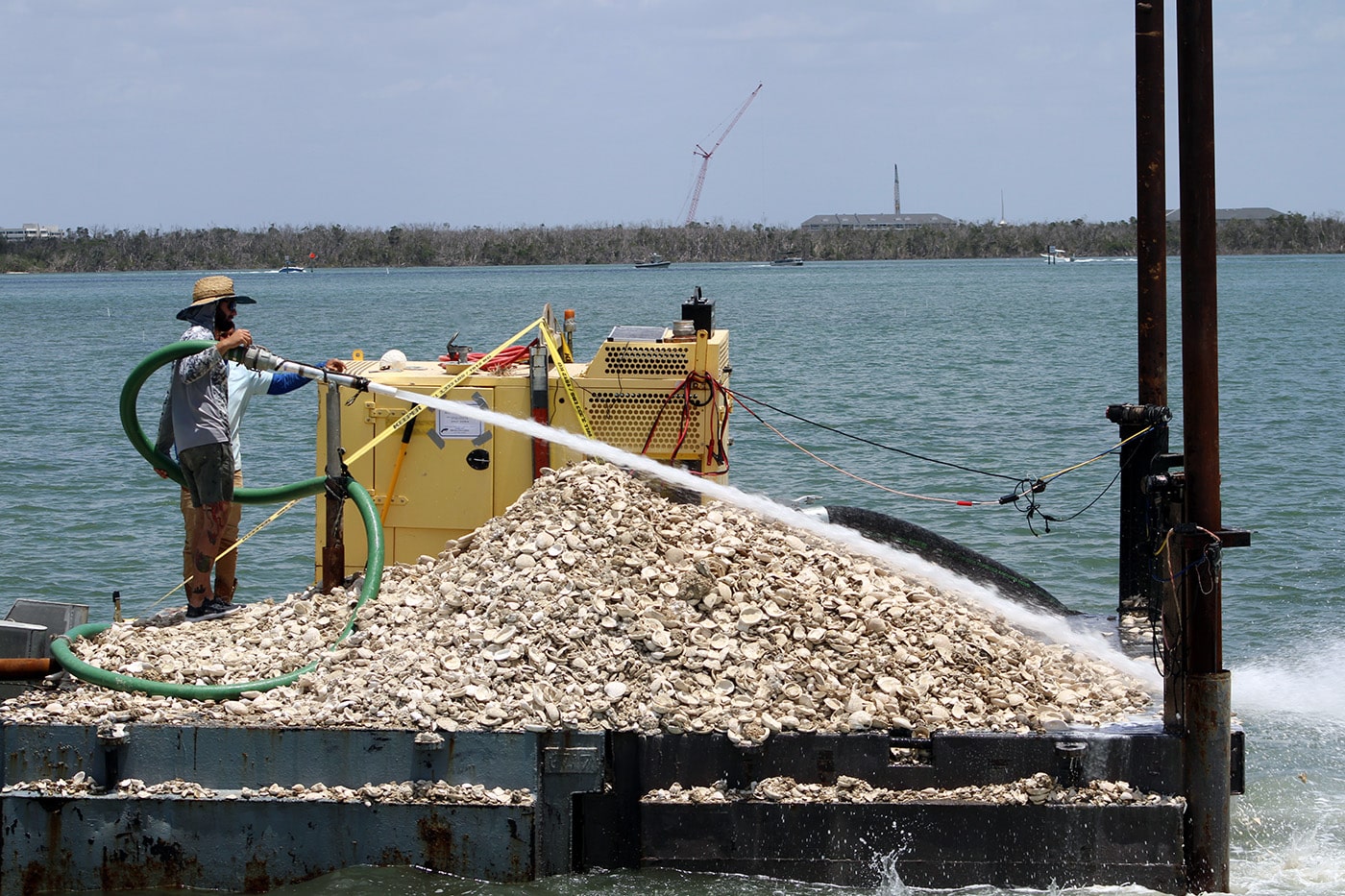
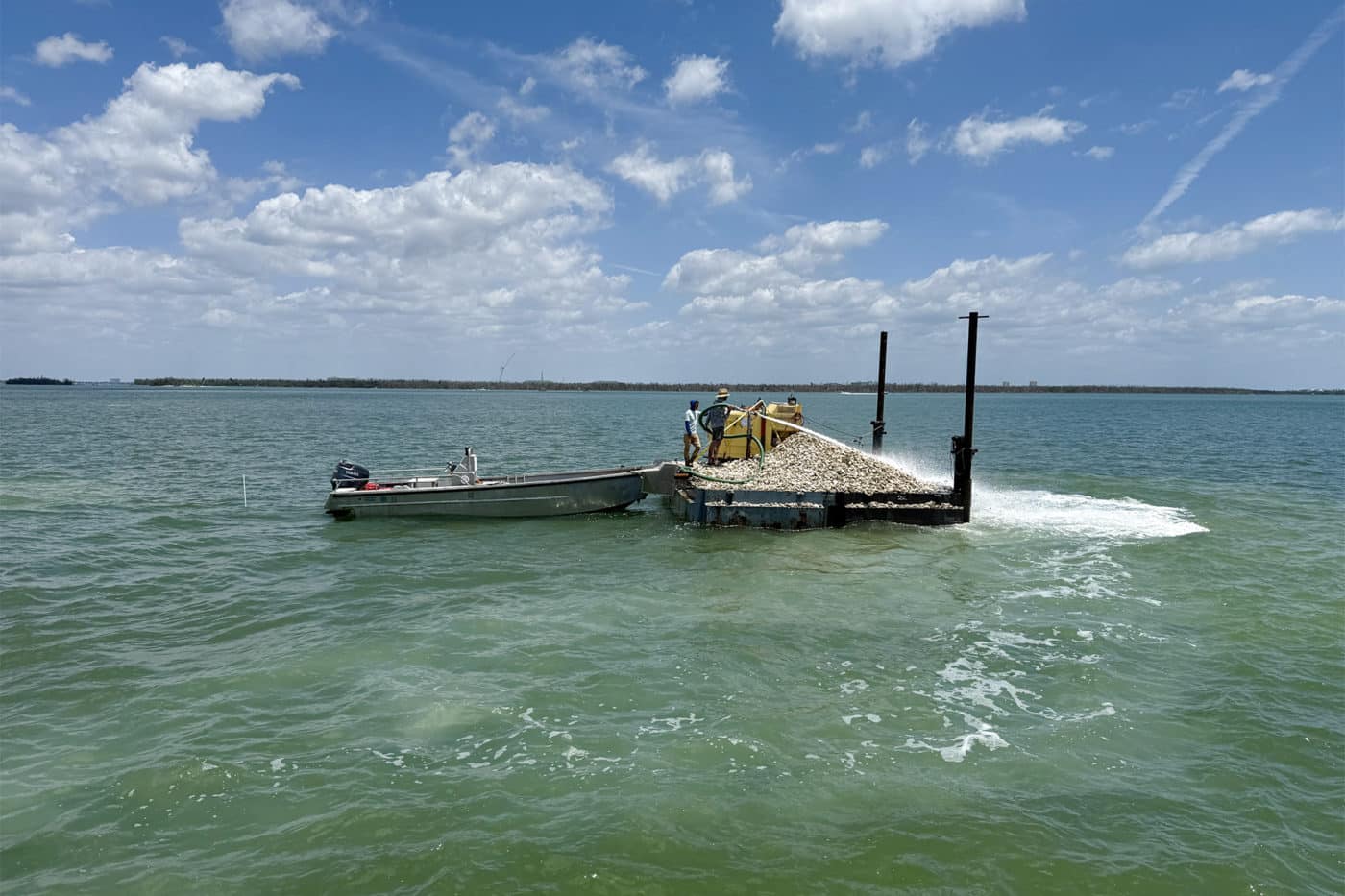
“The larger 4-inch fossil shell used for the project mimics the natural shell produced by oysters and is heavier, which can help it stay in place during hurricanes,” Milbrandt said.
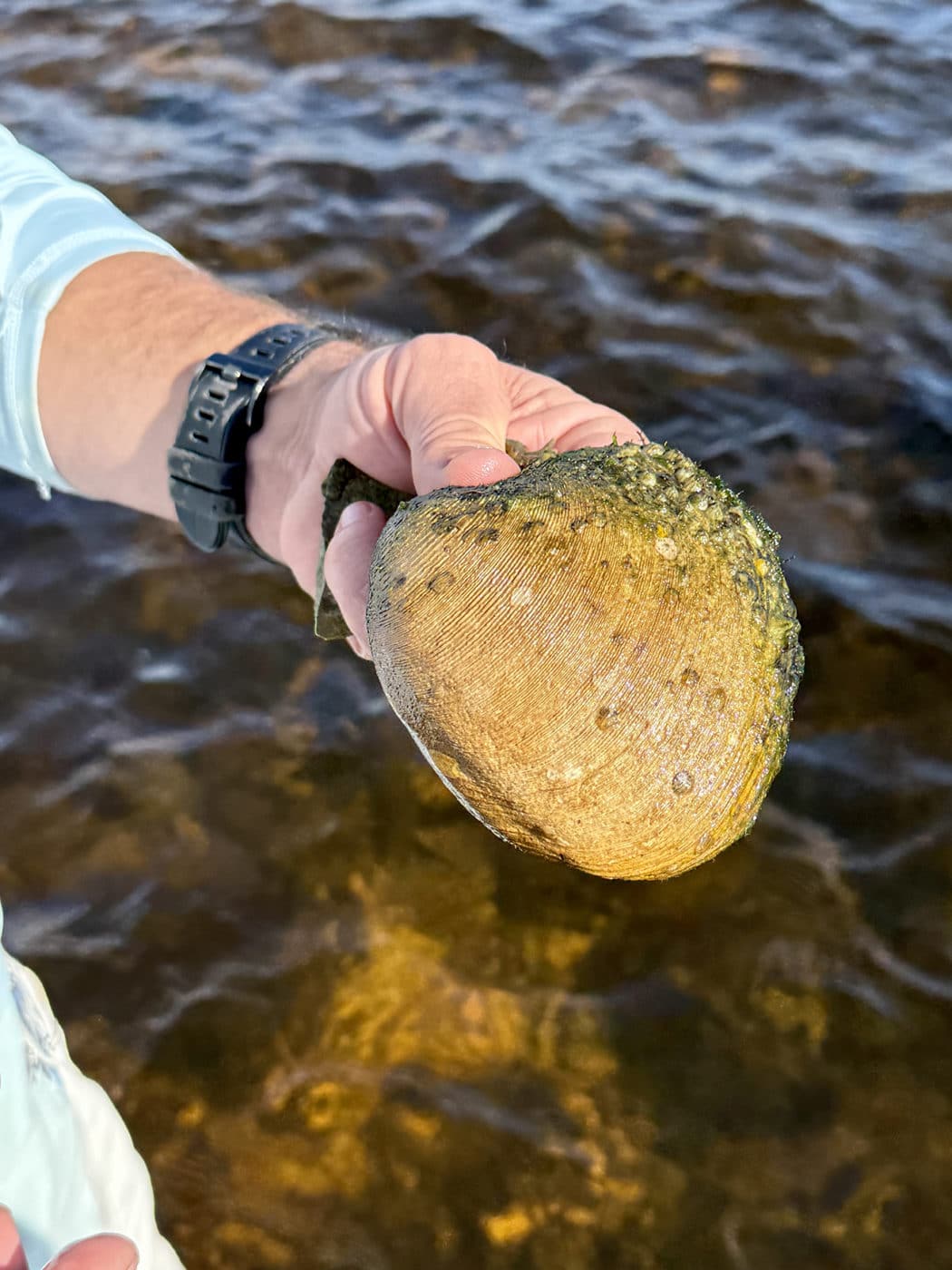
Living oyster reefs provide habitat for many fish and invertebrate species, such as redfish, snook, stone crab, and snapper. There have already been sightings of bull sharks, goliath grouper, snook, and other species swimming around the new reef, Milbrandt said.
Oyster spat was already found growing on a piece of fossilized shell at the reef on Aug. 13 — a promising sign for the future of this oyster reef.
SCCF scientists will visit the site every six months for the first few years to monitor progress and examine oyster density.
Why Restore Oysters?
Oysters have declined by 90% compared to a century ago both globally and regionally, yet these important species provide vital habitat to estuarine plants and animals and improve water quality by filtering water. Every oyster can filter around 50 gallons of water per day!
Florida’s native eastern oysters (Crassostrea virginica) form reefs that create structurally complex habitat that attracts fishes and invertebrates, improving the health and biodiversity of the ecosystem.
“They’re really important places for certain fish species like sheepshead and redfish,” Milbrandt said.
Additional ecosystem services oyster reefs provide include shoreline stabilization and removing suspended solids from the water, potentially benefitting seagrass growth and reducing the likelihood of harmful algal blooms.
In partnership with university and government partners, SCCF has conducted oyster research and restoration projects since 2007. With the new reef complete, SCCF will continue to look for funding to restore 25 acres of total restored oyster habitat in Charlotte Harbor. Smaller oyster restoration projects have been completed with the help of Coastal Watch volunteers, while larger projects such as this require a marine contractor.