Stay in the know about wildlife, water quality, and ecosystems on Sanibel and Captiva Islands and in Southwest Florida
Swallow-Tailed Kite Nesting Update: One Fledge, New Male Tracked
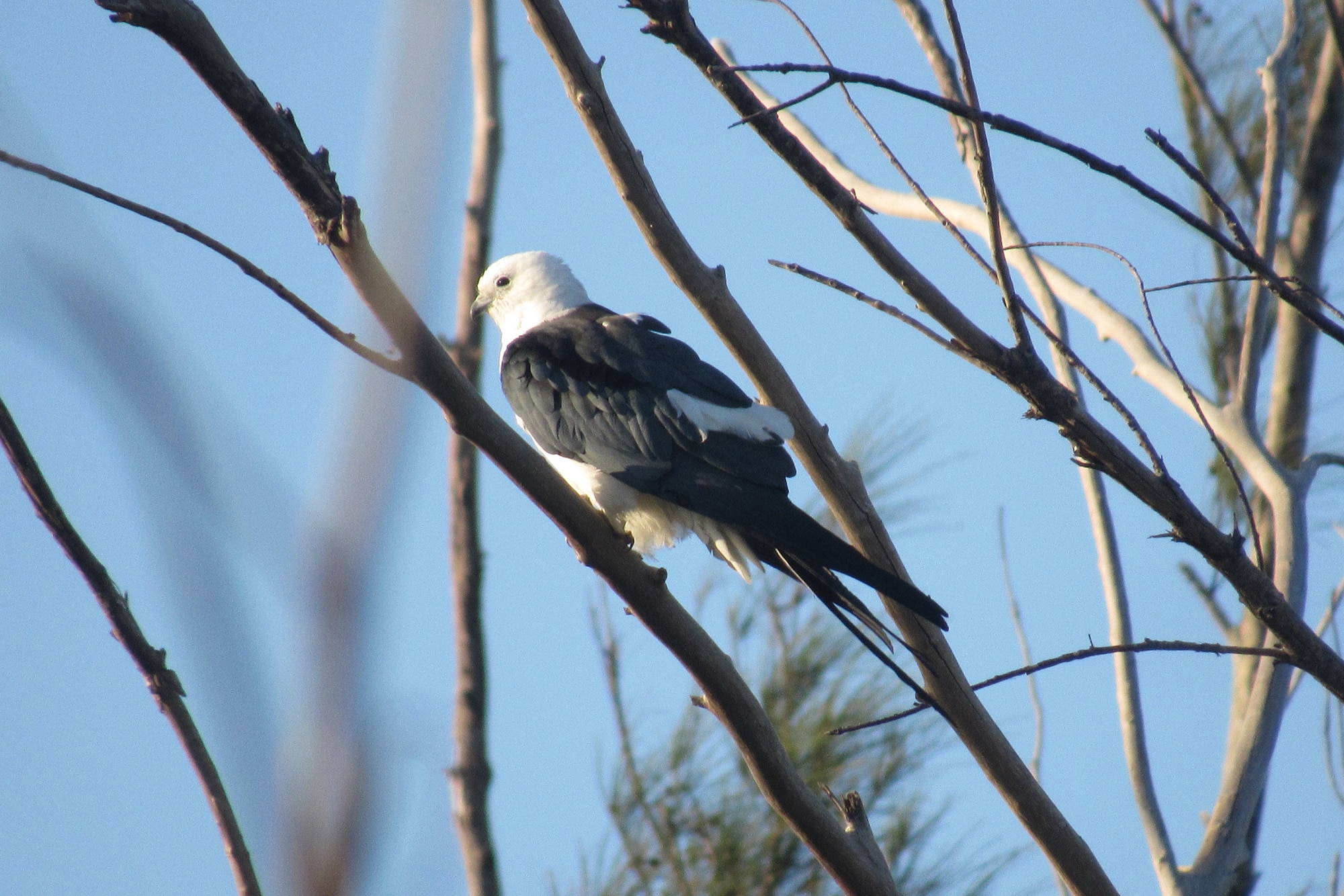
Sanibel Island saw two swallow-tailed kite (Elanoides forficatus) nest attempts during the 2025 breeding season. One nest failed early, while the other pair successfully fledged a chick.
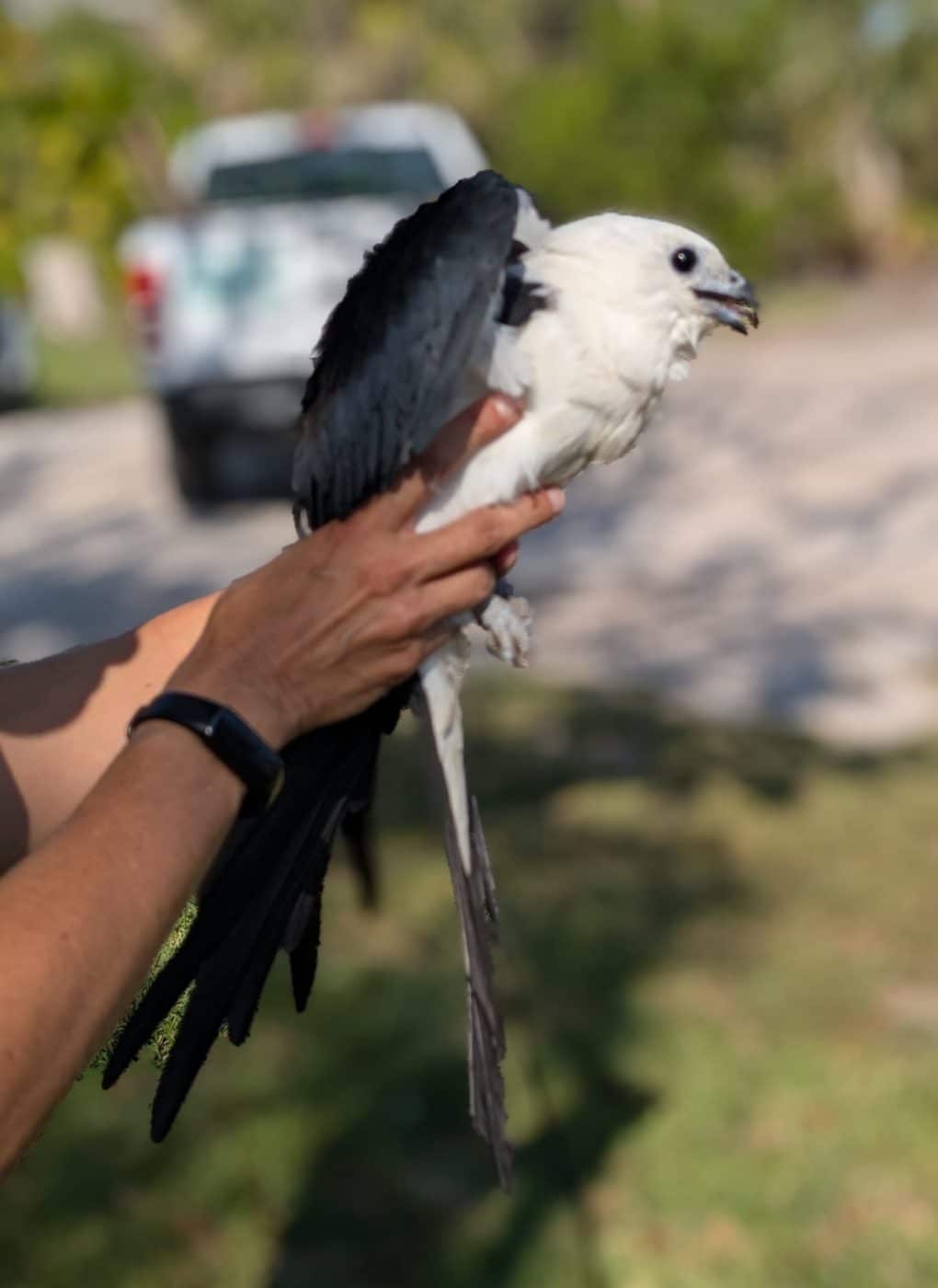
The adult male from the successful nest — now named Periwinkle — was later fitted with a satellite transmitter, thanks to a collaboration between the Sanibel-Captiva Audubon Society and the Avian Research & Conservation Institute (ARCI).
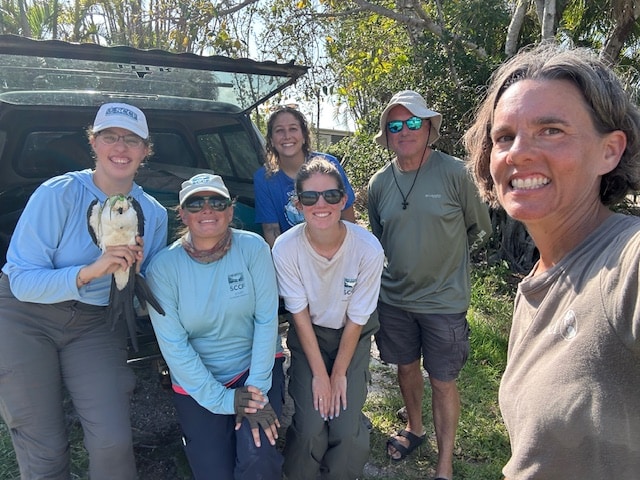
Though not the first swallow-tailed kite tagged on Sanibel, Periwinkle joins a growing group of tracked birds whose movements are helping researchers study habitat use, investigate migration and wintering threats, and determine critical breeding areas.
“Since being tagged, Periwinkle has remained in the local area, offering valuable insight into his post-breeding foraging behavior and home range across Sanibel and nearby off-island coastal regions,” said SCCF Shorebird Biologist Audrey Albrecht. “His data will be particularly informative as he prepares for fall migration and eventual journey toward South America for the winter.”
Two other swallow-tailed kites were tagged by ARCI on Sanibel in 2021 — Sanibel Botanical and Bailey’s Homestead. Sanibel Botanical has returned to the island each year, including 2025, while Bailey’s Homestead’s signal was lost in 2024.
SCCF monitors nesting swallow-tailed kites on the island during the breeding season (March through June) in partnership with ARCI, the City of Sanibel’s Natural Resources Department and a team of dedicated volunteers.
Swallow-tailed kites typically migrate back to their wintering grounds in South America between July and September. During this time, as many as 4,000 swallow-tailed kites may congregate at pre-migration roosts to rest and eat in preparation for their long journey! In addition to aerial surveys of roosting sites, ARCI relies on community science to gather accurate population data.
You can help ARCI with its swallow-tailed kite research and monitoring by reporting your sightings here.
“While swallow-tailed kites still face nesting challenges on Sanibel, particularly due to limited canopy habitat after Hurricane Ian, this year’s successful fledge and the ongoing tracking of Periwinkle are important steps forward,” Albrecht said. “Together, they help researchers and conservation partners better understand how to support this graceful species on the islands and beyond.”