Stay in the know about wildlife, water quality, and ecosystems on Sanibel and Captiva Islands and in Southwest Florida
Lechowicz Shares Salinity Impacts on Turtles at Global Symposium
SCCF Wildlife & Habitat Management Director Chris Lechowicz recently presented his research on how salinity has affected Sanibel’s turtle populations at the world’s largest gathering of non-marine turtle researchers.
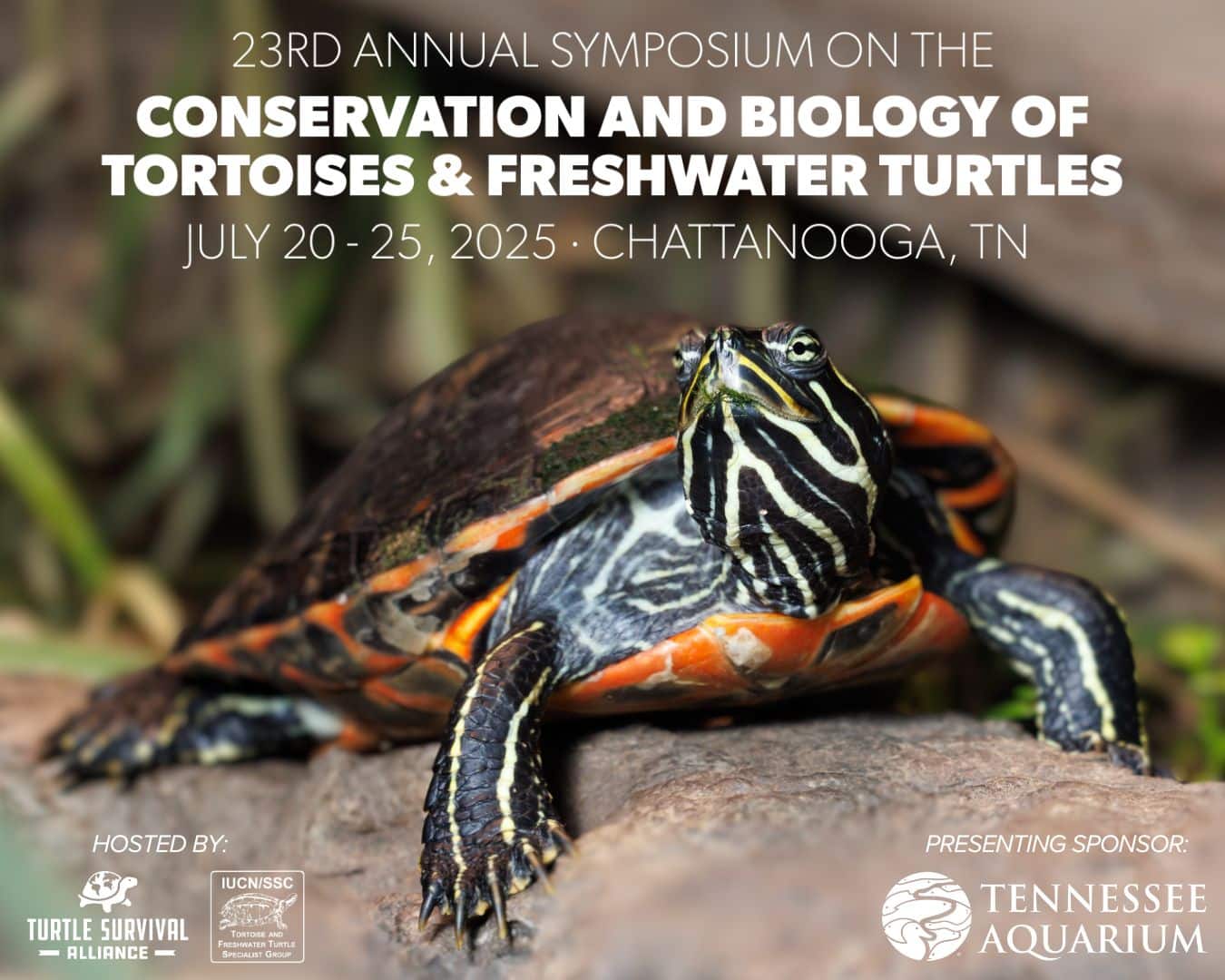
His topic fit in well with the theme of “Resilience: Protecting Turtles in a Changing World” at the 23rd Annual Symposium on the Conservation and Biology of Tortoises and Freshwater Turtles.
Held this year in Chattanooga, Tennessee, the week of July 20, it is the largest global gathering of non-marine turtle researchers, conservationists, academics, and students.
“Only 7 of the 365 species of turtles and tortoises in the world are marine or sea turtles,” said Lechowicz. “So, we have a lot to discuss — a lot of collaborations come about through the symposium.”
Participants from nineteen countries attended a three-day series of talks, one day of workshops, and a field trip.
“The theme of this year’s conference was very relevant to the issues we are dealing with on our barrier islands due to sea level rise and more intense storms,” said Lechowicz.
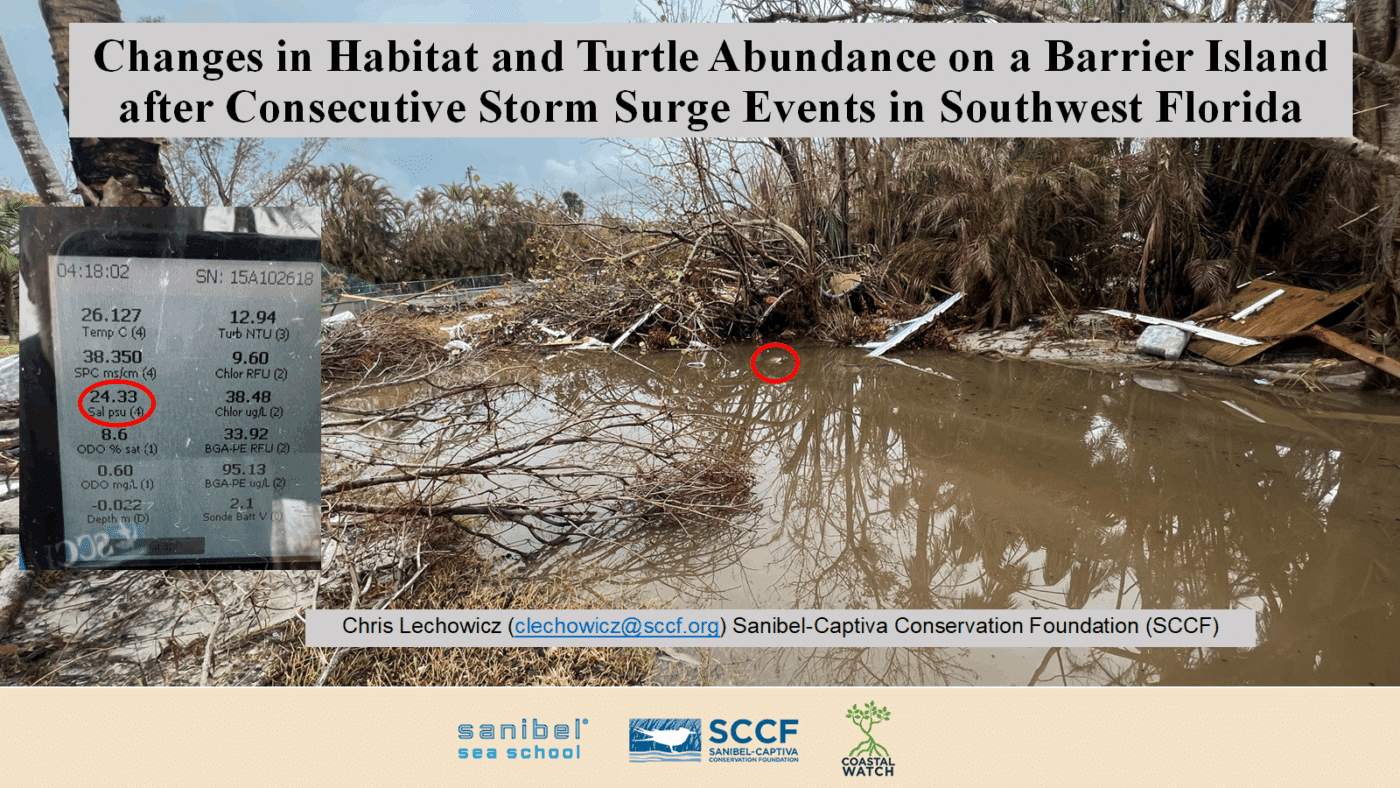
His presentation was “Change in Habitat and Turtle Abundance on a Barrier Island After Consecutive Storm Surge Events in Southwest Florida.”
He shared that several of our permanent water species — peninsula cooters (Pseudemys peninsularis), Florida red-bellied turtles (Pseudemys nelsoni), and Florida softshell turtles (Apalone ferox) — which where once widespread across the island, are now absent from most of the island, except for a few areas on the oldest and highest parts of Sanibel.
However, turtles that inhabit ephemeral areas or temporary pools, appear to be holding on due to their ability to aestivate or stay dormant underground for long periods of time, even though they had some significant losses, such as striped mud turtles (Kinosternon baurii).
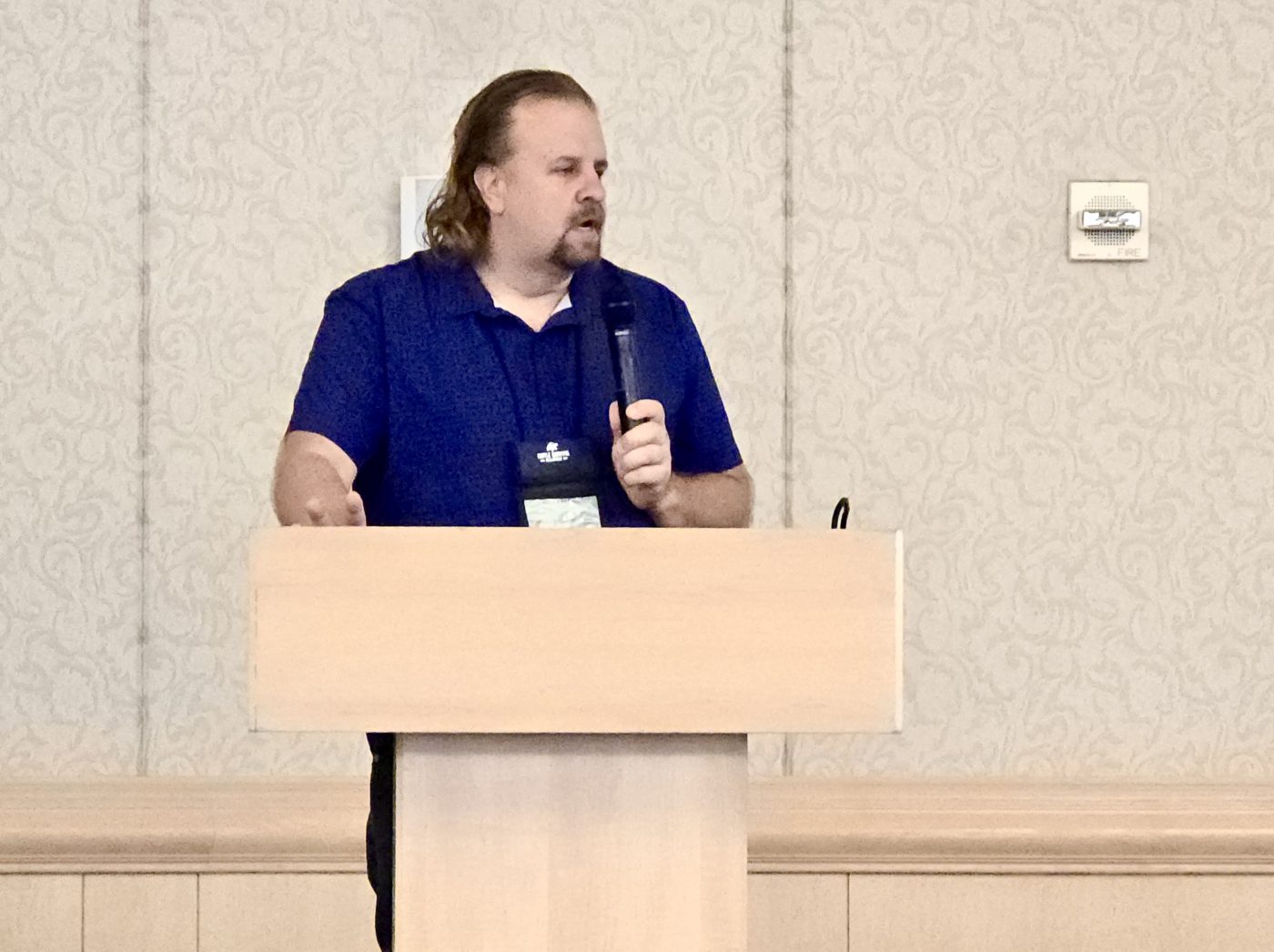
“I was able to share our findings and issues with experts from around the world and get many suggestions and ideas,” he said.
The Tennessee Aquarium was the hosting site where workshops, the ice breaker social, and other activities took place.
It features the largest collection of turtles on display and behind the scenes of any aquarium or zoo in the U.S.
Many of these rare turtles are bred at the aquarium for assurance colonies, in the hope that they can be released one day in their native range.
“Turtles are the most at-risk vertebrate group currently and have become a top conservation priority around the world,” he added. “Over half the species are endangered due to habitat loss, traditional medicine use, consumption, and collection for the international pet trade.”