Stay in the know about wildlife, water quality, and ecosystems on Sanibel and Captiva Islands and in Southwest Florida
Post-Ian Wildlife Sightings Pick Up
By Chris Lechowicz, Wildlife & Habitat Management Director
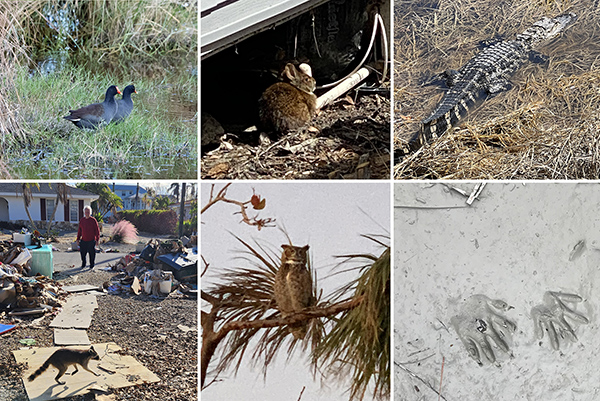
Reports of wildlife sightings post-Hurricane Ian are hugely important for understanding what species and ecosystems have been negatively affected or unaffected by the severity of the storm. Sanibel and Captiva biologists had a solid understanding of what existed on the island before the hurricane. The storm surge and high wind effects on the island will be studied for many years, and we also need as much information as we can gather on what wildlife survived the hurricane. Witnesses can report what species they encounter and where through SCCF’s easy online form to help us collect and organize these sightings.
Birds
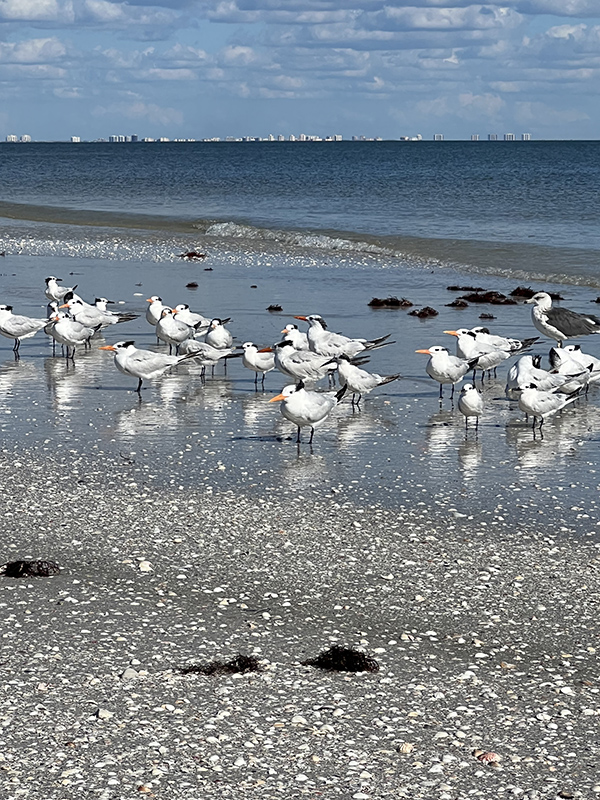 Since the hurricane, dozens of island bird species have been reported from both staff and residents. Many people have noticed a change in some birds’ behavior or documented birds they seldom see, especially the first few weeks post-Ian. This is due to displacement from the storm and the lack of foliage in the trees. Various wading birds and shorebirds have been reported and appear to have fared the storm quite well. Even some banded shorebirds have been reported alive, well, and foraging. As far as raptors, red-shouldered hawks (Buteo lineatus), osprey (Pandion haliaetus), and eastern screech owls (Megascops asio) have all been reported. Our resident bald eagles (Haliaeetus leucocephalus) have all been accounted for but are looking for new nesting sites due to the loss of their current nests. High winds stripped away most of the leaves, enabling smaller, more cryptic species to be seen more easily. The leaves are now coming back strongly in surviving trees and shrubs, and we expect bird behavior to become more normalized.
Mammals
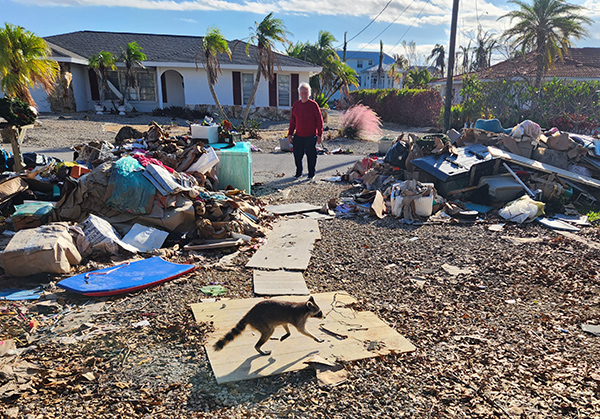
Residents have been an immense help in reporting the mammals they have seen. We have verification on the post-Ian presence of raccoons (Procyon lotor), bobcats (Lynx rufus), coyote (Canis latrans), black rat (Rattus rattus)*, and one marsh rabbit (Sylvilagus palustris). Marsh rabbits were a common prey species for bobcats, coyotes, raptors, and the coachwhip snake (Masticophis flagellum) on the island, and their population appears to have been significantly reduced. We are still looking to document the Virginia opossum (Didelphis virginiana), river otter (Lutra canadensis), cotton rat (Sigmodon hispidus), and Sanibel rice rat (Oryzomys palustris sanibeli).
Insects
Several insect groups such as butterflies (Lepidoptera), including the monarch butterfly (Danaus plexippus), and various dragonflies (Odonata) have been reported.
Amphibians and Reptiles
Only two amphibians have been reported so far. Cuban treefrogs* (Osteopilus septentrionalis) have been reported from several areas on the island, and one unidentified toad. This group is extremely sensitive to salt water, so any verifications of these extant species would be appreciated.
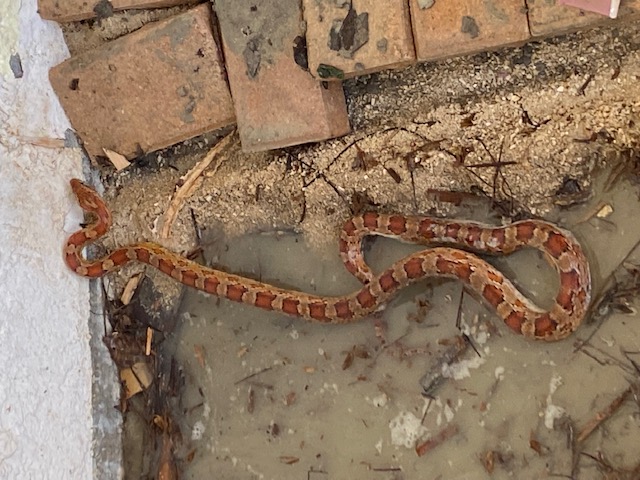 Eastern ratsnakes (Pantherophis alleghaniensis), Florida watersnakes (Nerodia fasciata pictiventris), mangrove saltmarsh snakes (Nerodia clarkii compressicauda), southern black racers (Coluber constrictor priapus), the southern ring-necked snake (Diadophis punctatus), and the Brahminy blindsnake* (Indotyphlops braminus) have all been reported. Mostly exotic lizards, such as the very abundant Cuban brown anole* (Anolis sagrei) and green iguana* (Iguana iguana) have been documented all over the island. One native lizard, the eastern glass lizard (Ophisaurus ventralis) was seen on Sanibel-Captiva Road.
SCCF staff and volunteers have now documented all 11 species of non-marine turtles known to occur on the island pre-hurricane. However, higher mortality of a few species, such as Florida softshell turtle (Apalone ferox), Florida chicken turtle (Deirochelys reticularia chrysea), and the Florida mud turtle (Kinosternon steindachneri) appear to be from a lower tolerance for saltwater intrusion and/or being in shallow pools that were smothered with heavy natural or manmade debris.
*Exotic