Stay in the know about wildlife, water quality, and ecosystems on Sanibel and Captiva Islands and in Southwest Florida
Sea Turtle Research Moves to FGCU
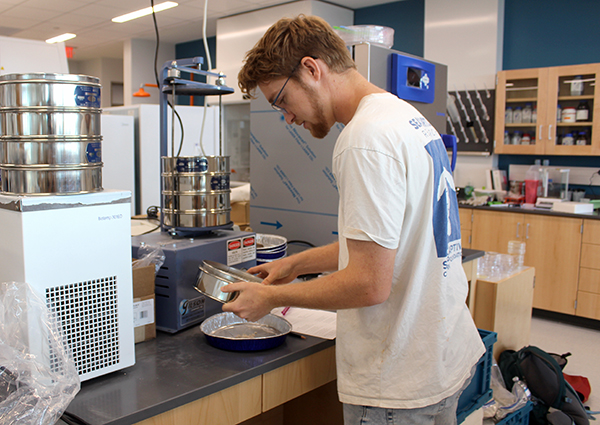
The SCCF Sea Turtle team didn’t skip a beat conducting their research. Before Hurricane Ian, some lab equipment and materials were moved to The Water School at Florida Gulf Coast University where they were more likely to be out of harm’s way. This included sea turtle blood samples, which must be kept at -80 degrees C (-112 degrees F).
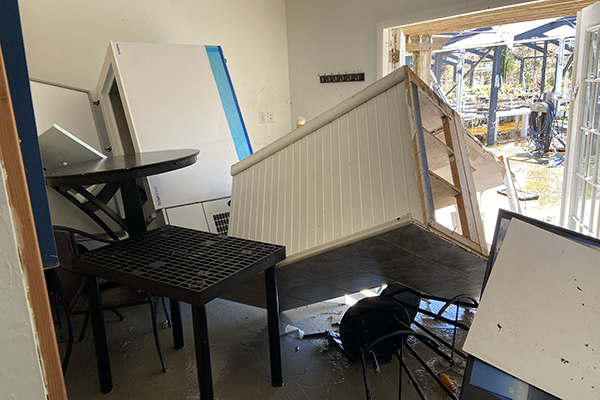 The freezer where the blood samples were originally being kept on Sanibel ended up being flipped over and destroyed by flood water.
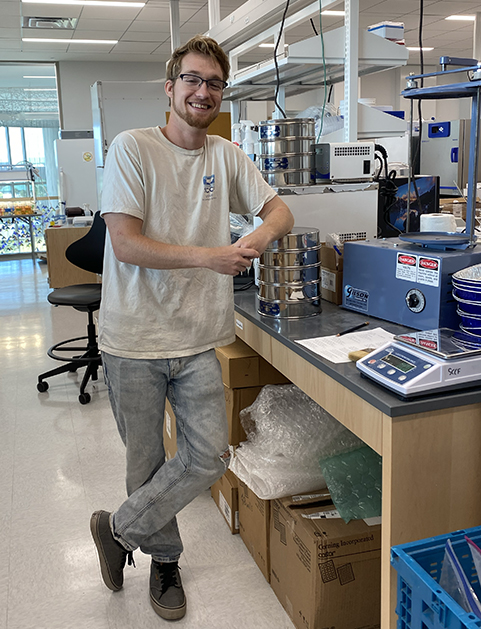 Since the hurricane, Sea Turtle Research Technician Jacob Wozny has been using lab space generously provided to SCCF by FGCU’s Dr. Hidetoshi Urakawa to continue working on a long-term SCCF study investigating differences in sea turtle hatch success on Sanibel versus Captiva beaches.
The multiyear project is “taking a deeper look into how physical properties of the incubation environment may interact to impact hatch success, such as temperature, moisture, and sand grain size, compaction, color, and bulk density,” Wozny said.
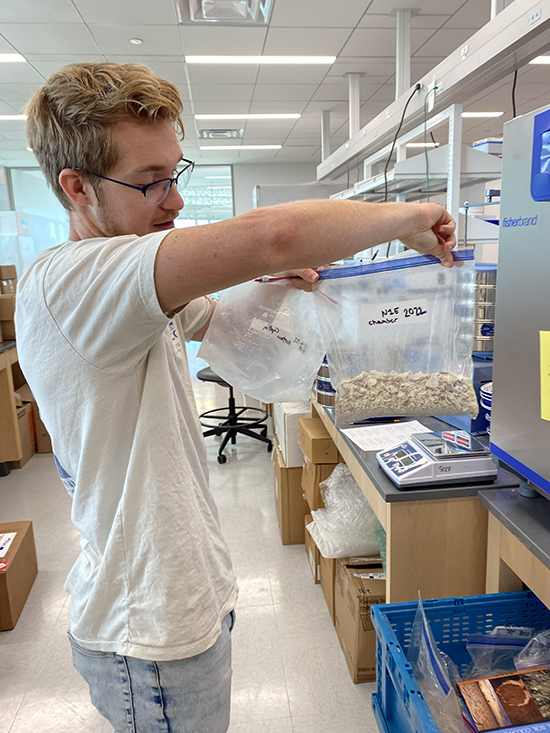 Along with collecting two sand samples per sea turtle nest — one from the top layer and one from several layers deep where eggs would be laid — for 60 nests, the team also installed probes in each nest to record the temperature, moisture, and groundwater level every 15 minutes throughout incubation. Now that the field work is completed, Wozny has been using a specialized machine to separate the sand samples by particle size.
“The sand on Sanibel has some differences from the sand on Captiva, which has added nonnative sand to its beaches as part of ongoing beach renourishment projects,” he said.
Coastal Wildlife Director and Sea Turtle Program Coordinator Kelly Sloan said that the data may provide insight into why Captiva has had historically lower annual hatch success (the proportion of eggs producing live hatchlings) than Sanibel.
“Captiva’s hatch rate this year was only 31%, which is alarmingly low compared to nearly 49% and 61% on Sanibel east and Sanibel west, respectively,” Sloan said. “We’re hoping this project will help us learn more about the factors that could be contributing to low productivity on these beaches.”
Wozny’s position was funded by a grant awarded from the Sea Turtle Grants Program, which is funded from proceeds from Florida Sea Turtle License Plate sales. Other SCCF staff involved in this study include Sea Turtle Biologist Jack Brzoza, Wildlife Biologist Mike Mills, and Research Technician Megan Reed (2021 season).