Stay in the know about wildlife, water quality, and ecosystems on Sanibel and Captiva Islands and in Southwest Florida
SCCF Joins USGS Satellite Tagging Terrapin Project

To further its ongoing research and advocacy efforts, SCCF began satellite tagging diamondback terrapins (Malaclemys terrapin) in May as part of a collaborative project with the Wetland and Aquatic Research Center of the United States Geological Survey (USGS).
In response to declining populations, the overall aim of the USGS project is to collect spatial data, such as daily movement, home range size, and habitat use on terrapins in the southeast U.S.
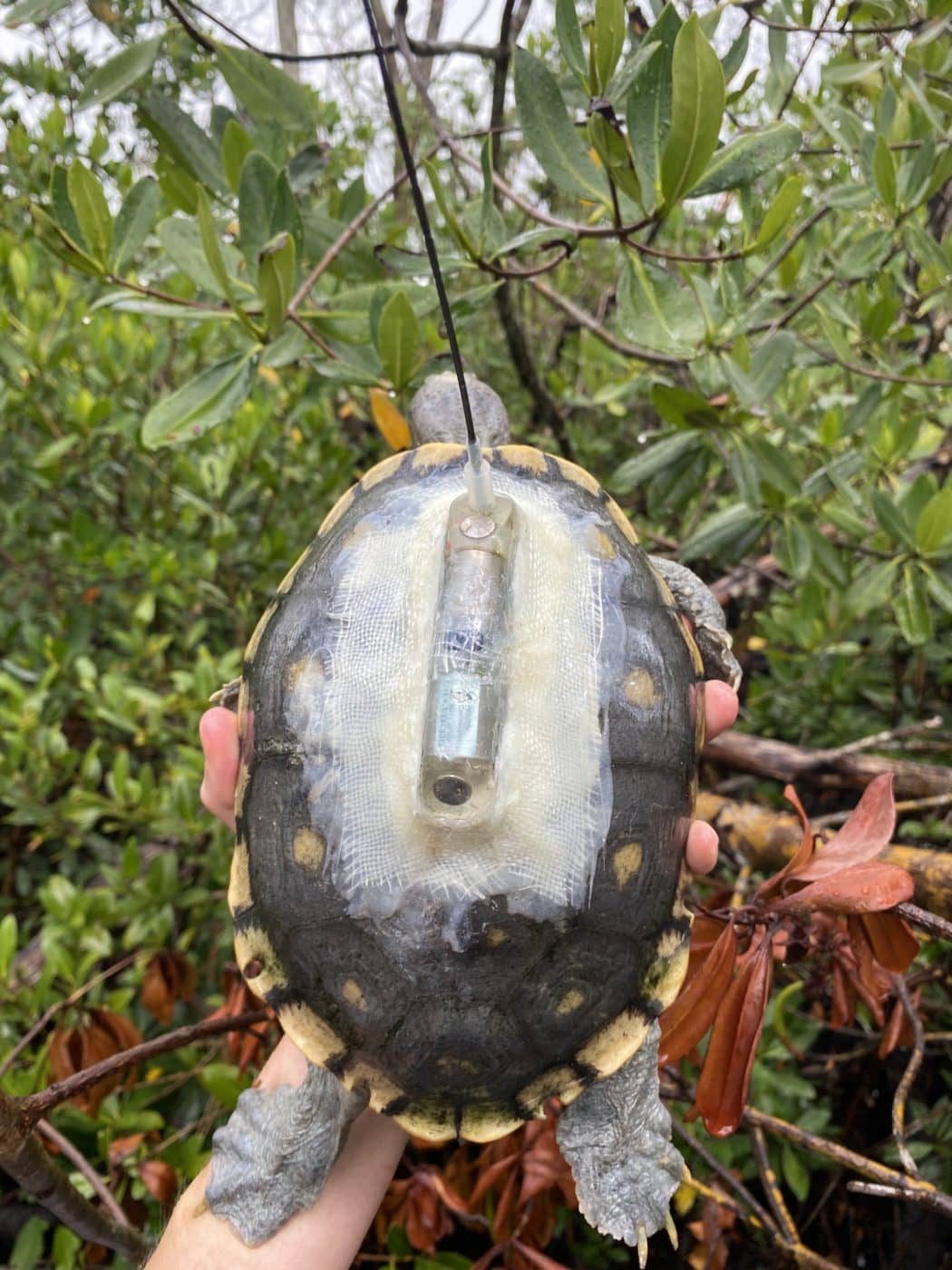
SCCF is contributing data on terrapins that inhabit Pine Island Sound.
This data is essential for understanding how a species interacts with its habitat and can lead to the development of a more comprehensive conservation plan for the diamondback terrapin, which is the only estuarine turtle species in North America.
“This is especially needed because the diamondback terrapin faces numerous threats such as habitat loss from overdevelopment, water pollution, poaching for the pet trade, and boat strikes,” said SCCF Wildlife Biologist Mike Mills. “However, the most serious threat — one that is unique to this turtle species — is accidental drowning from being trapped in crab traps, also known as crab pots.”
Research by SCCF helped lead to required protections on recreational crab traps that went into effect in 2023. Now, the Florida Fish & Wildlife Conservation Commission (FWC) is considering requiring the same protective devices on commercial crab traps in Pine Island Sound.
How crab traps imperil terrapins
The bait that is used to catch blue crabs (Callinectes sapidus) attracts terrapins. Once a terrapin enters the trap, many are unable to find their way out and drown because crab traps are only checked every 6 to 36 hours.
“Abandoned or lost crab traps known as ‘ghost traps’ are especially dangerous because they continue to trap terrapins until they break apart over time. Some ghost traps have been found with over 50 dead terrapins inside,” said Mills.

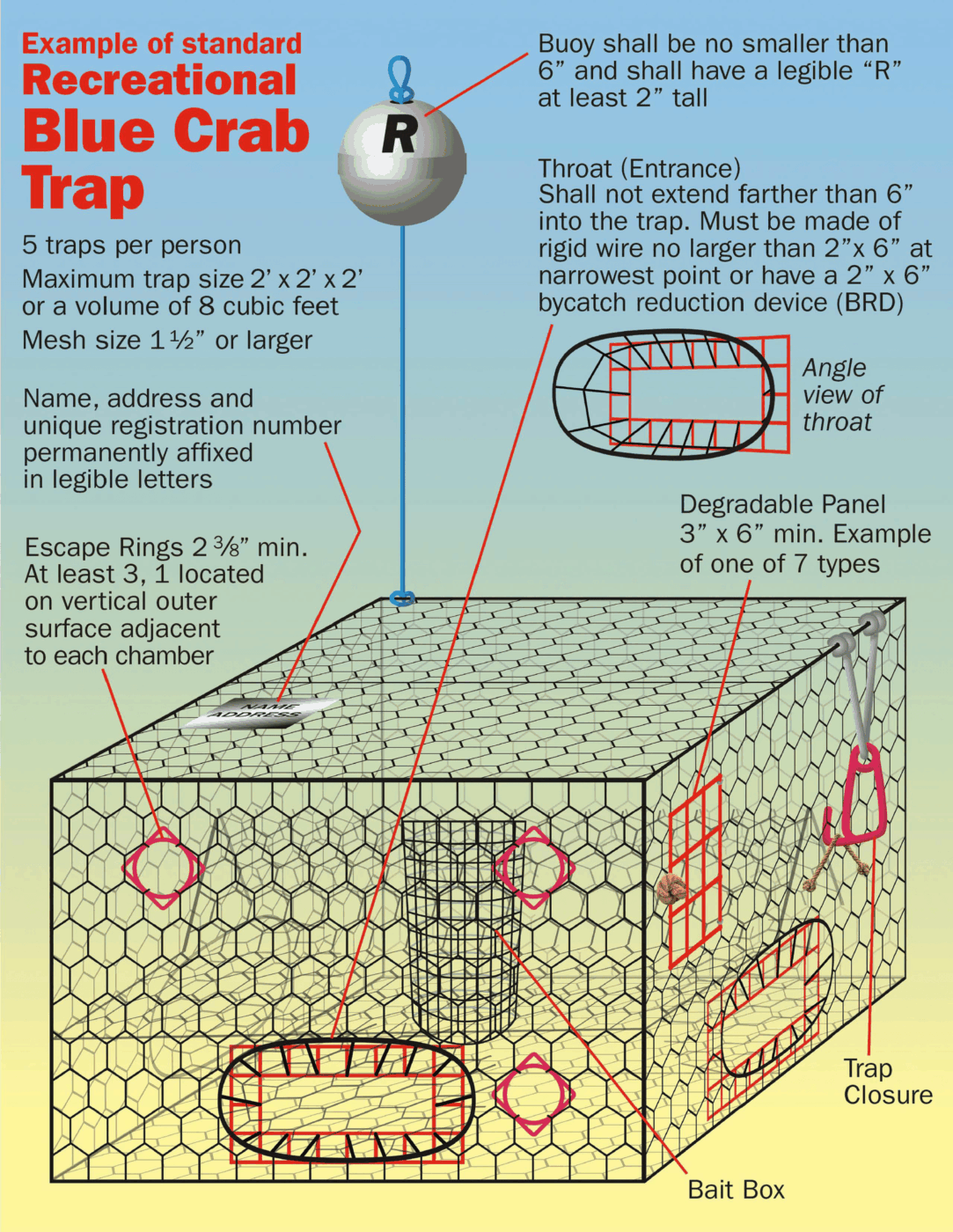
Bycatch reduction devices (BRD) are rectangular, metal or plastic barriers that can easily be zip-tied to the entrances of crab traps. These devices have been proven to exclude 73 percent of all terrapins that try to enter the trap while also not decreasing the blue crab catch rate.
In 2022, the FWC passed regulations requiring that BRDs are placed on all recreational crab traps in Florida. That rule went into effect in March 2023.
“There is currently a push to require BRDs on commercial traps in 5 different areas in Florida. Charlotte Harbor, which includes Pine Island Sound, is one of them,” said Mills.
Will SCCF research lead to more protection?
The reason that Charlotte Harbor is one of the areas being considered for commercial BRDs is due to the research SCCF has conducted on diamondback terrapins since 2012. Each year, SCCF captures terrapins to take biometric data and to mark individuals’ shells with notches and pit tags (microchips).
Marked individuals can then be identified if recaptured in following years, allowing for population estimates, survivability rates, and sex and age ratios to be calculated.
SCCF’s initial satellite tagging project on terrapins — the first of its kind — was conducted from 2013 to 2015.
“That project provided valuable data on where our local terrapins move and nest,” said Mills.
Heavy resistance by the crabbing industry against BRDs on commercial traps is still prominent despite peer-reviewed, published scientific research showing that BRDs do not affect blue crab catch rate.
“For more than a decade, SCCF has advocated and provided research for the diamondback terrapin and will continue to do so to secure a better future for this imperiled species,” said Mills.
Diamondback terrapins have been petitioned for federal listing.
If you would like to make comments on this issue, please email FWC at Marine@MyFWC.com or call 800-487-0554.