Stay in the know about wildlife, water quality, and ecosystems on Sanibel and Captiva Islands and in Southwest Florida
Groundwater Monitoring Supports Research on Sanibel Rice Rat
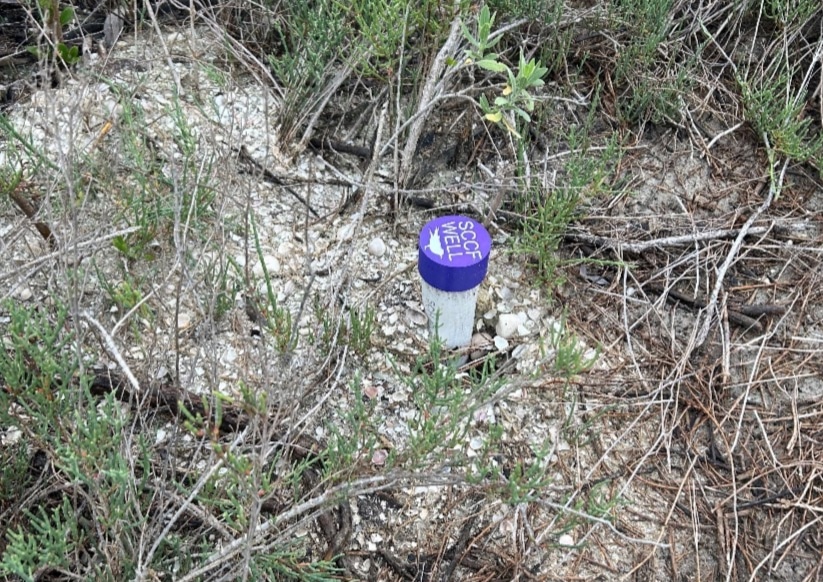
Earlier this year, a network of groundwater wells was expanded to include all potential habitat for a small mammal that is endemic to Sanibel. The Sanibel Island rice rat (Oryzomys palustris sanibeli) is dependent on the open wetland grassland habitat that was widespread on Sanibel in the mid 20th century.
“Working together with the J.N. “Ding” Darling National Wildlife Refuge, and funded through the Ding Darling Wildlife Society, a team of researchers from University of Florida, the U.S. Fish & Wildlife Service, and SCCF are seeking to determine how surface and groundwater levels are influencing the movements of mammals on Sanibel,” said SCCF Marine Lab Director Eric Milbrandt, Ph.D.
The groundwater monitoring wells are distributed throughout the island. The level of groundwater and surface water has been under investigation since 2018 by staff at the Marine Lab.
“The network has been used to show how storm surge, rainfall, and tidal pumping can influence water levels,” said Milbrandt. “The water level data, along with salinity, are collected from wells that are mostly in wetland areas and will be shared with researchers who are capturing and collaring the small mammals.”
Most of the past captures of the Sanibel Island rice rat are in the Refuge near “Legion curve.” This area is maintained as open grasslands due to frequent prescribed fire.
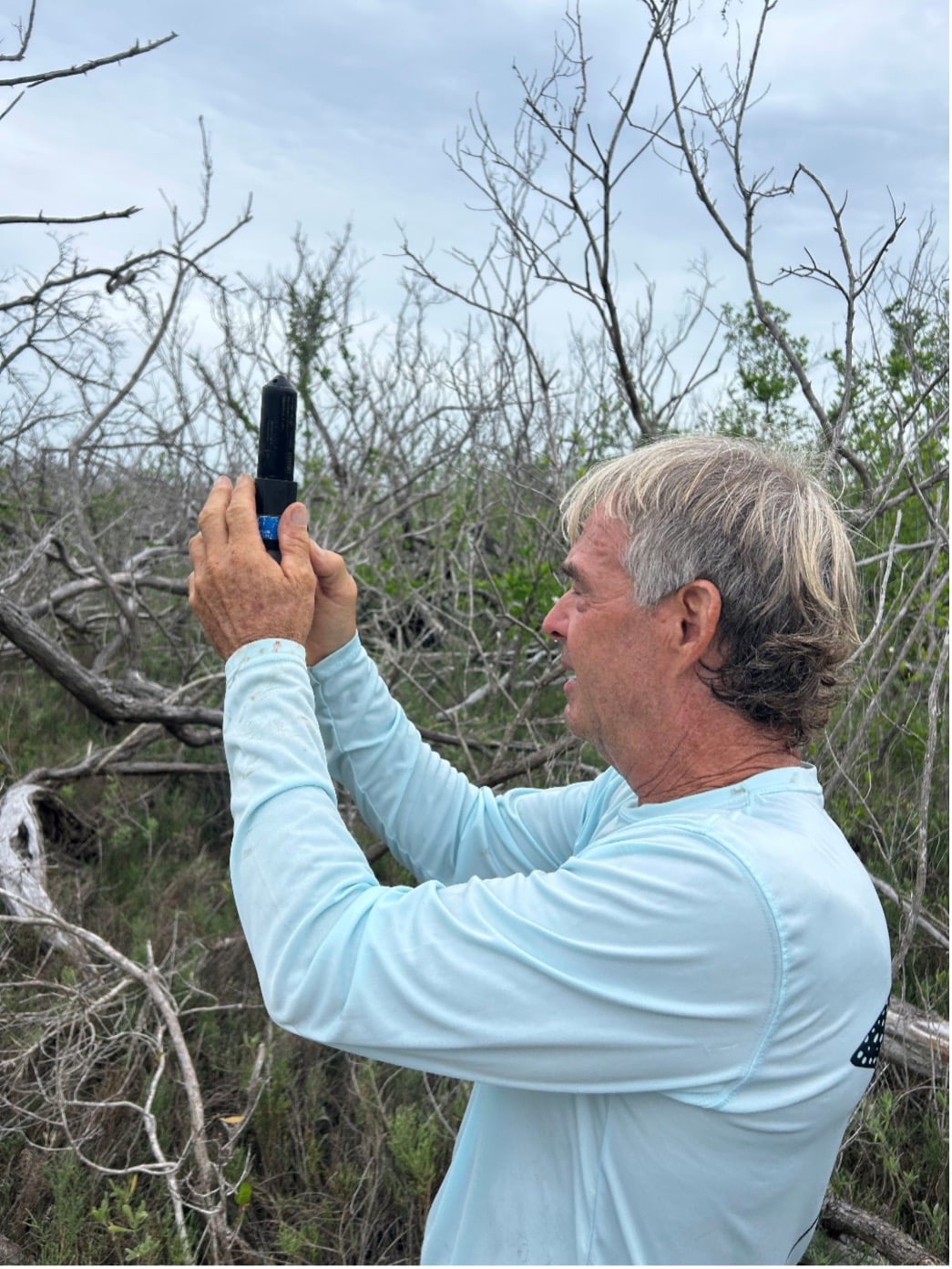
Prior to the controlled burn on July 1, the water level sensors were measured and the wells were prepared for the burn by SCCF researcher Mark Thompson. The work is ongoing and will continue through 2026.