Stay in the know about wildlife, water quality, and ecosystems on Sanibel and Captiva Islands and in Southwest Florida
Study Suggests Oyster Larvae & Spat are Resilient & Abundant in Estuary
A new study in the Journal of Shellfish Research co-authored by SCCF Marine Laboratory Director Eric Milbrandt, Ph.D. examines oyster larvae distribution and settlement at sites across the Charlotte Harbor Estuary (CHE) from 2020-2023.
Milbrandt conducted the research with Florida Gulf Coast University faculty members Melissa A. May (lead author), Grace Markell, and Felix Jose.
Eleven sites spanning four regions of the lower CHE were sampled every two weeks from June to November — the oyster spawning season — to assess bivalve larvae density, oyster settlement, and environmental parameters including salinity, temperature, depth, dissolved oxygen, turbidity, and chlorophyll. Bivalve larvae were not classified by species, so counts could have also included species like clams and scallops.
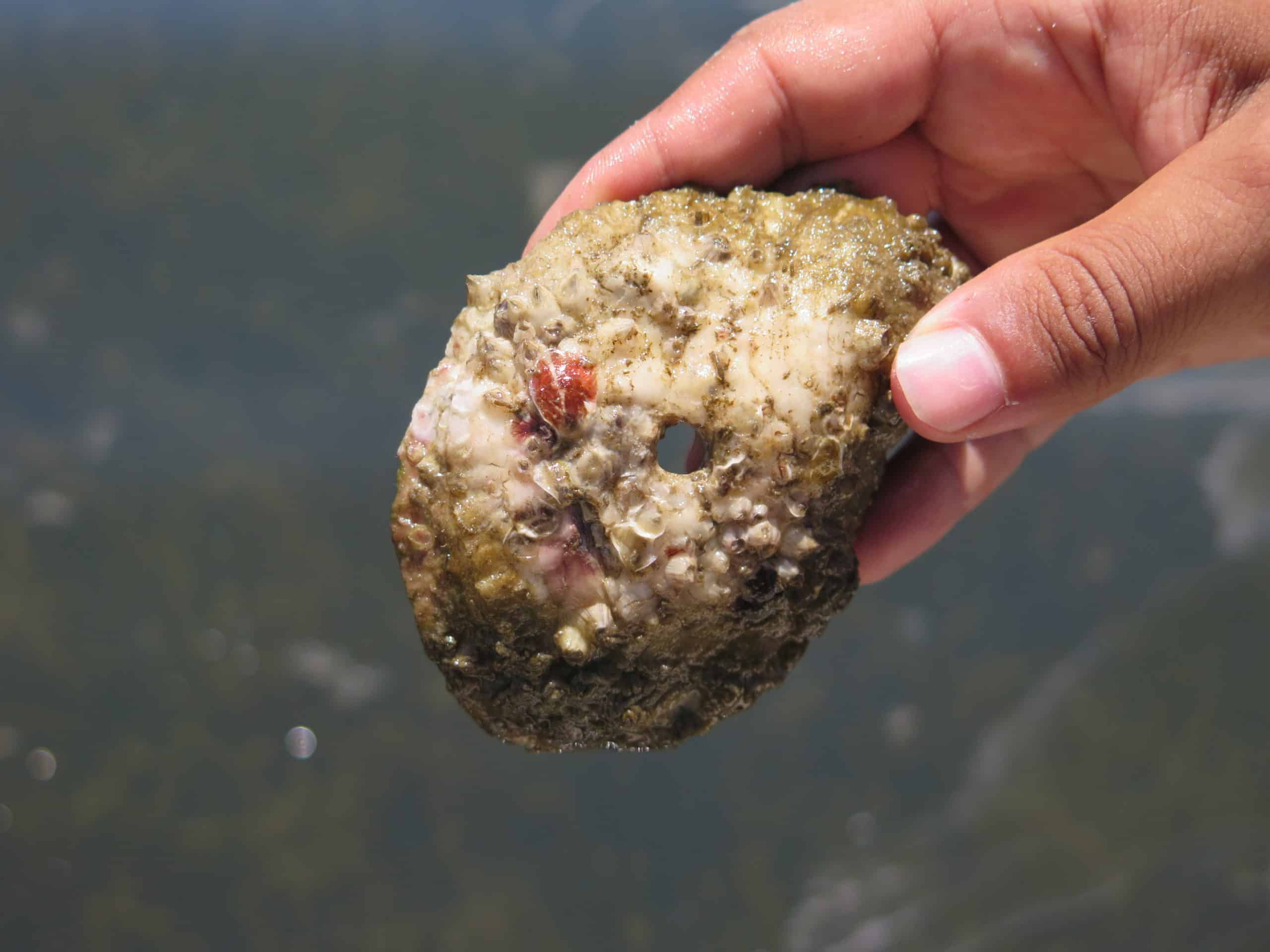
Both bivalve larvae (free-swimming) and oyster spat (settled onto a substrate) in the CHE were abundant throughout the estuary during the study.
“They also showed resilience to environmental stressors including Hurricane Ian in 2022, a subsequent red tide bloom, and a heat wave in 2023,” Milbrandt said.
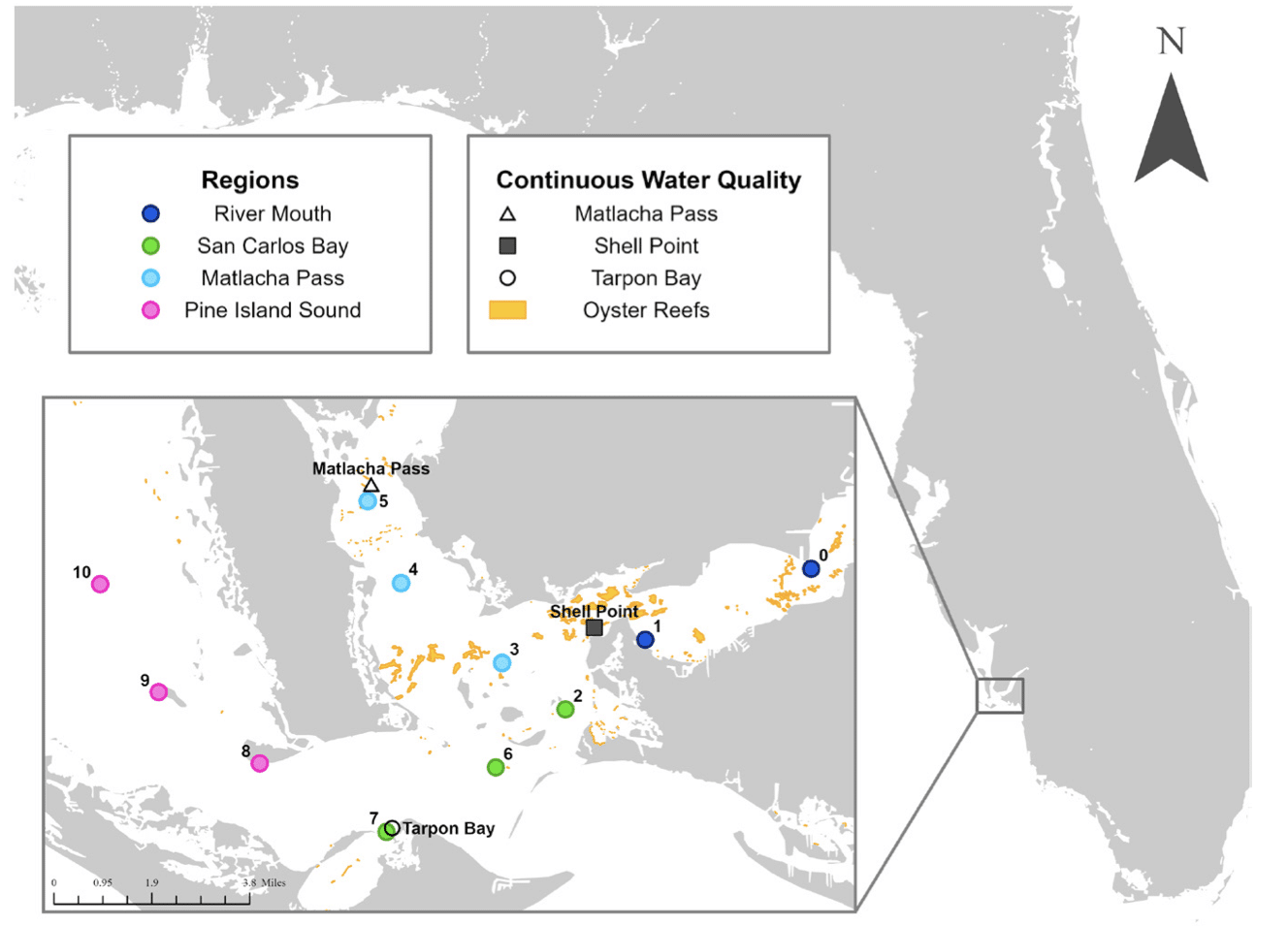
Bivalve larval density and oyster settlement were lowest near the mouth of the Caloosahatchee River, where freshwater flows enter the estuary from watershed runoff and Lake Okeechobee releases during the wet season.
Previous studies have suggested that high flow rates in the estuary negatively influence oyster larvae, in part from prolonged exposure to reduced salinity from freshwater flows. Conversely, during the dry season, the Caloosahatchee Estuary can become too salty for oysters and other important species if we aren’t receiving enough freshwater.
“In this study, bivalve larval abundance was strongly correlated with temperature and food availability, but surprisingly not salinity,” Milbrandt said. “Oyster settlement showed a positive correlation with temperature and a slight negative correlation with salinity.”
The findings suggest that restoration efforts in CHE would likely benefit from additional substrate in areas of high larval abundance, which was exactly the thought behind the new, 3-acre oyster reef SCCF constructed this summer with grants from the U.S. Fish & Wildlife Service, Florida Fish & Wildlife Conservation Commission, Lee County, and the Coastal Conservation Association.
“The location of the new reef was selected based on existing oyster recruitment, water depth, water quality, and proximity to other oysters, and oyster spat has already been observed growing here,” Milbrandt said.