Stay in the know about wildlife, water quality, and ecosystems on Sanibel and Captiva Islands and in Southwest Florida
Changes to Watersnake Dominance & Range on Sanibel
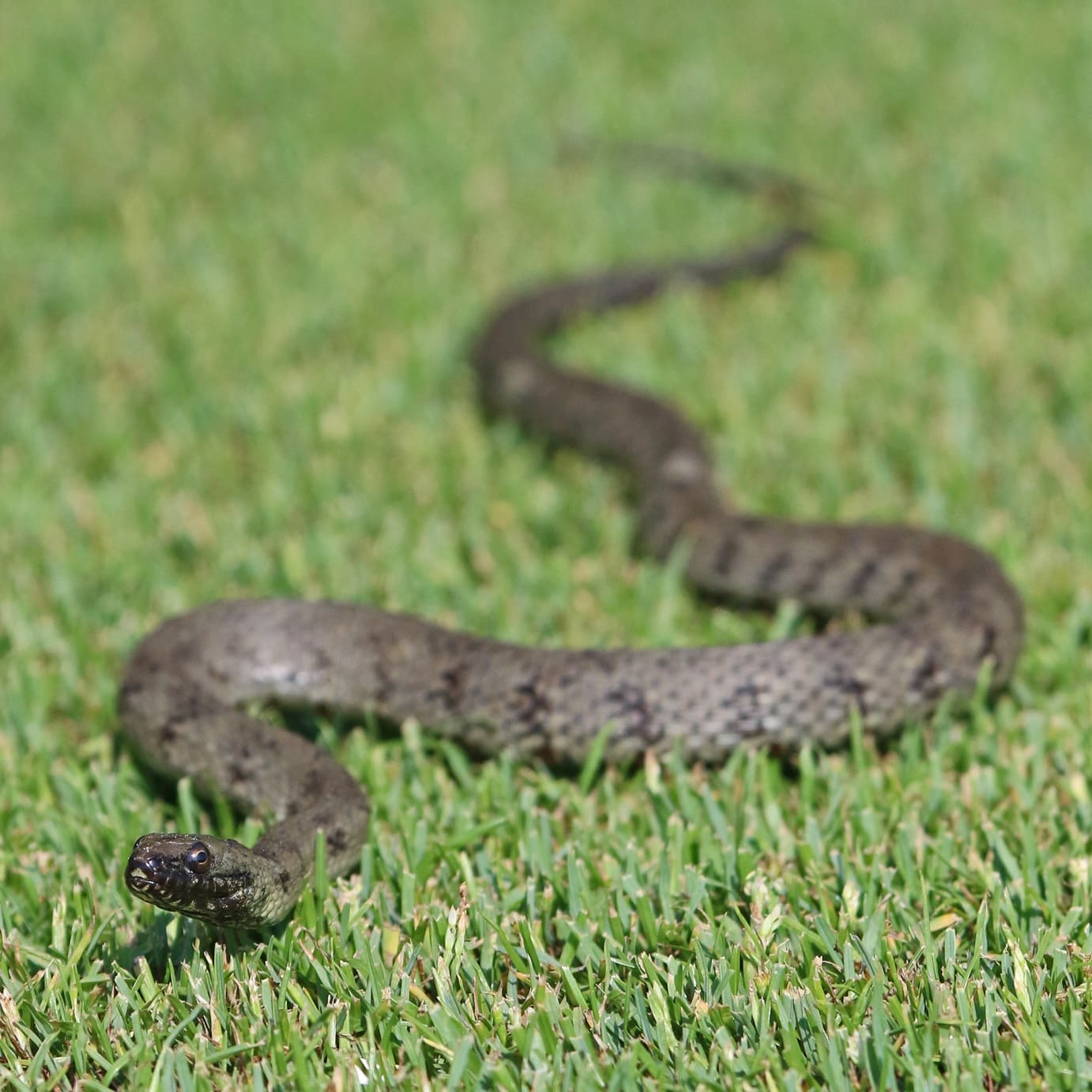
Southwest Florida is home to several nonvenomous watersnake Nerodia species, as well as the venomous Florida cottonmouth (Agkistrodon piscivorus conanti). However, only two nonvenomous watersnake species occur on Sanibel.
Watersnakes are often misidentified as the venomous Florida cottonmouth, which has never been documented on any island in Pine Island Sound, although it occurs on the mainland in Lee County.
“Prior to Hurricane Ian, the two nonvenomous watersnake species had relatively distinct ranges that overlapped to a minor degree in some areas on Sanibel,” said Wildlife & Habitat Management Director Chris Lechowicz.
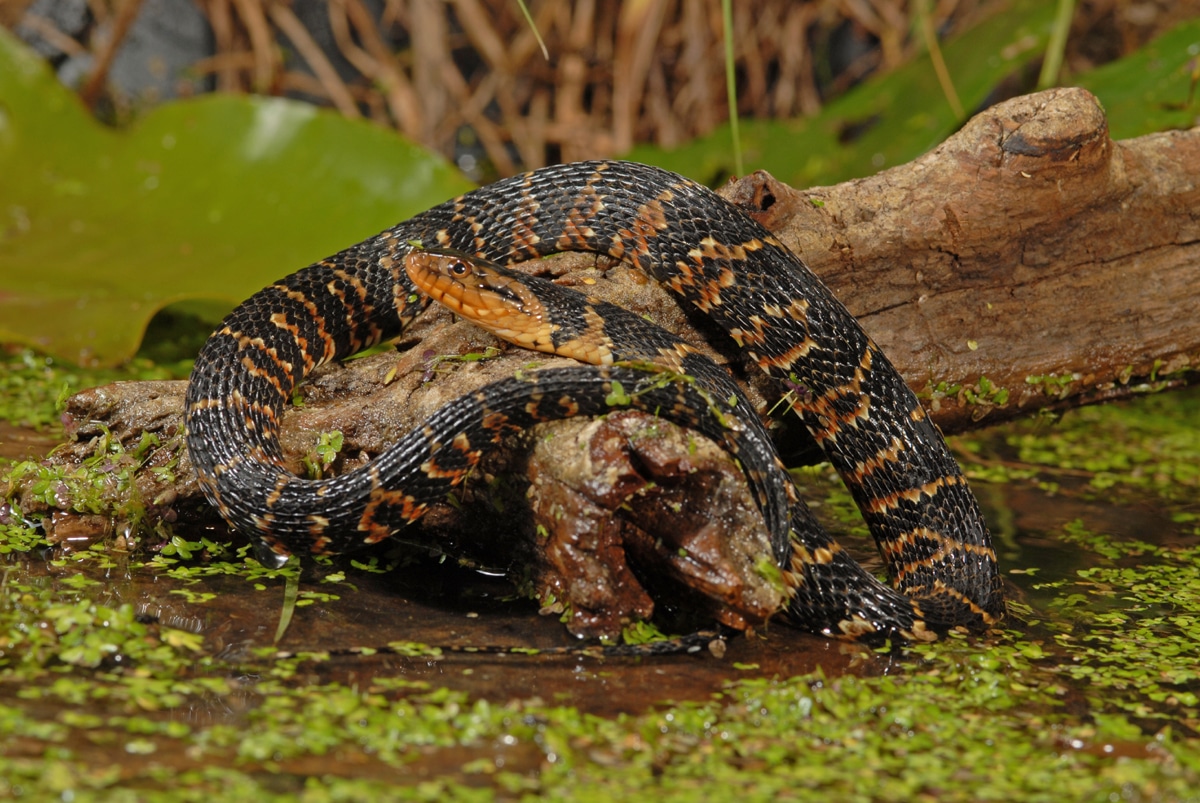
The freshwater species, the Florida watersnake (Nerodia fasciata pictiventris), was the inhabitant of all the freshwater bodies in the interior of the island, such as lakes, ponds, marshes, and ditches.
However, in the brackish and saltwater areas, the mangrove saltmarsh snake (Nerodia clarkii clarkii) is the sole watersnake species observed. This species is unique in that it is polymorphic, meaning it can exhibit several colors.
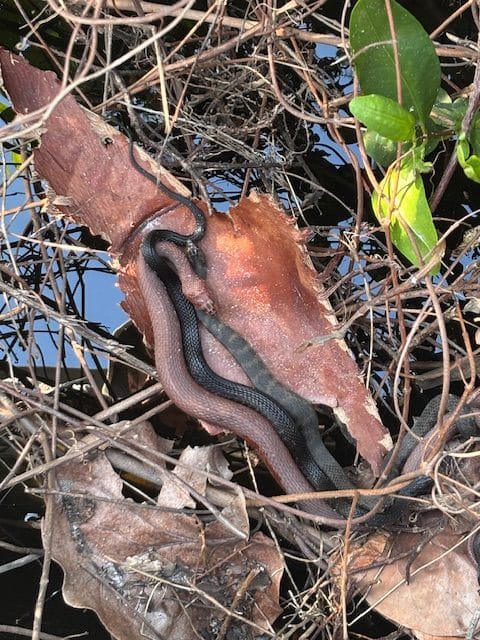
The most common colors are dark brown, gray, or even black, with some patterning on their back. However, completely red or orange snakes are not uncommon. This species (14-30″) is also not as large as the freshwater species (22-42”).
With the storm surge events from Hurricanes Ian, Helene, and Milton, the freshwater bodies were inundated with seawater, making them brackish.
“This change has allowed mangrove saltmarsh snakes to infiltrate many interior areas that were once freshwater,” said Lechowicz. “Occurrences of the freshwater Florida watersnake have become fewer, as permanent freshwater has been a rarity on the island over the last three years.”
Mangrove saltmarsh snakes are being documented in areas that never had them previously because of the increased salinity of waterbodies across the island.
“Hybridization has been documented in these two species in other parts of Florida, and it is almost inevitable that this is occurring or has occurred on the island,” added Lechowicz.
SCCF biologists are monitoring the shifting range of these two species. The future of both species on the island is very much tied to the frequency of storm surge events going forward.
Don’t be Fooled
North American watersnakes (Genus = Nerodia) are some of the most misunderstood and misidentified snakes in the United Snakes. These nonvenomous aquatic snakes are all too often misidentified as the venomous Florida cottonmouth or “water moccasin” (Agkistrodon piscivorus conanti), which shares some of their natural range.
Although watersnakes are harmless, their ability to try to mimic the venomous cottonmouth, as a defense, often fools the masses. Differentiating between watersnakes and cottonmouths is not that difficult — if the proper characteristics are learned.
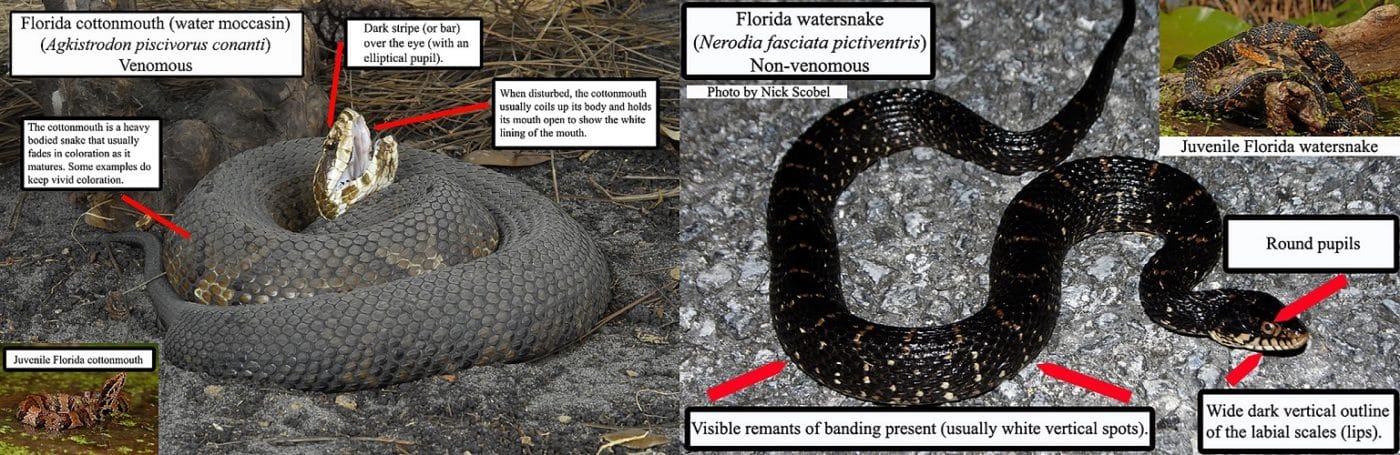
It is common knowledge that watersnakes do not appreciate being handled by people and will exhibit defensive tendencies if provoked, such as inflating their bodies, coiling up, flattening their heads to appear triangular, and, of course, striking. This does not make them aggressive, as their first response is almost always to flee.
Learn how to tell the difference from UF Wildlife Lab>>>